
Assalam-o-Alaikum!
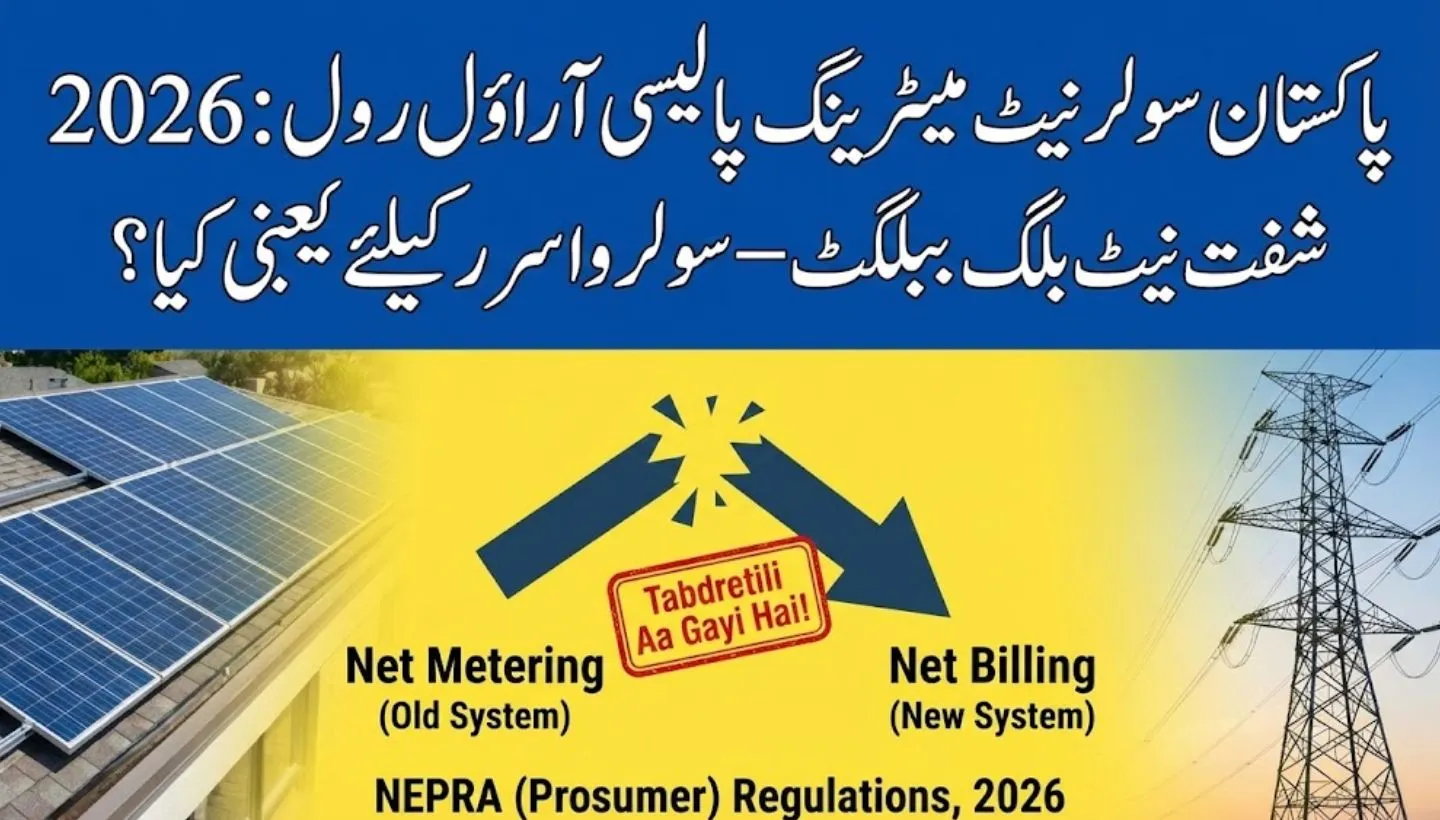
Many Pakistanis invested heavily in solar panels, thinking they would generate free electricity from sunlight, reduce bills to near zero, and even benefit the national grid by feeding excess power. The idea was simple: produce during the day, use what you need, and export surplus to the grid for credits. But the government has now introduced major changes through the NEPRA (Prosumer) Regulations, 2026, notified on February 9, 2026. This effectively ends the old net metering system and replaces it with net billing.
In this article, we break down the key changes based on the latest official notification and expert insights (including discussions from solar industry leaders like Pakistan Solar Association Chairman Waqas Moosa). These updates impact thousands of existing and potential solar users across Pakistan.
What Was Net Metering? (The Old System – 2015 Regulations)
Under the previous NEPRA Alternative & Renewable Energy Distributed Generation and Net Metering Regulations, 2015:
- Solar users (prosumers) generated electricity during the day.
- Excess units exported to the grid (via DISCOs like LESCO, IESCO, etc.) were credited unit-for-unit (1:1 ratio).
- At night or low-production times, imported units were offset against exported credits.
- Effective benefit: ~Rs. 50–60 per unit saved (due to retail tariff rates).
This made solar investments attractive – payback in 4–6 years, near-zero bills for many.
Major Changes in NEPRA Prosumer Regulations 2026
The new regulations repeal the 2015 rules and introduce net billing for all prosumers (existing and new):
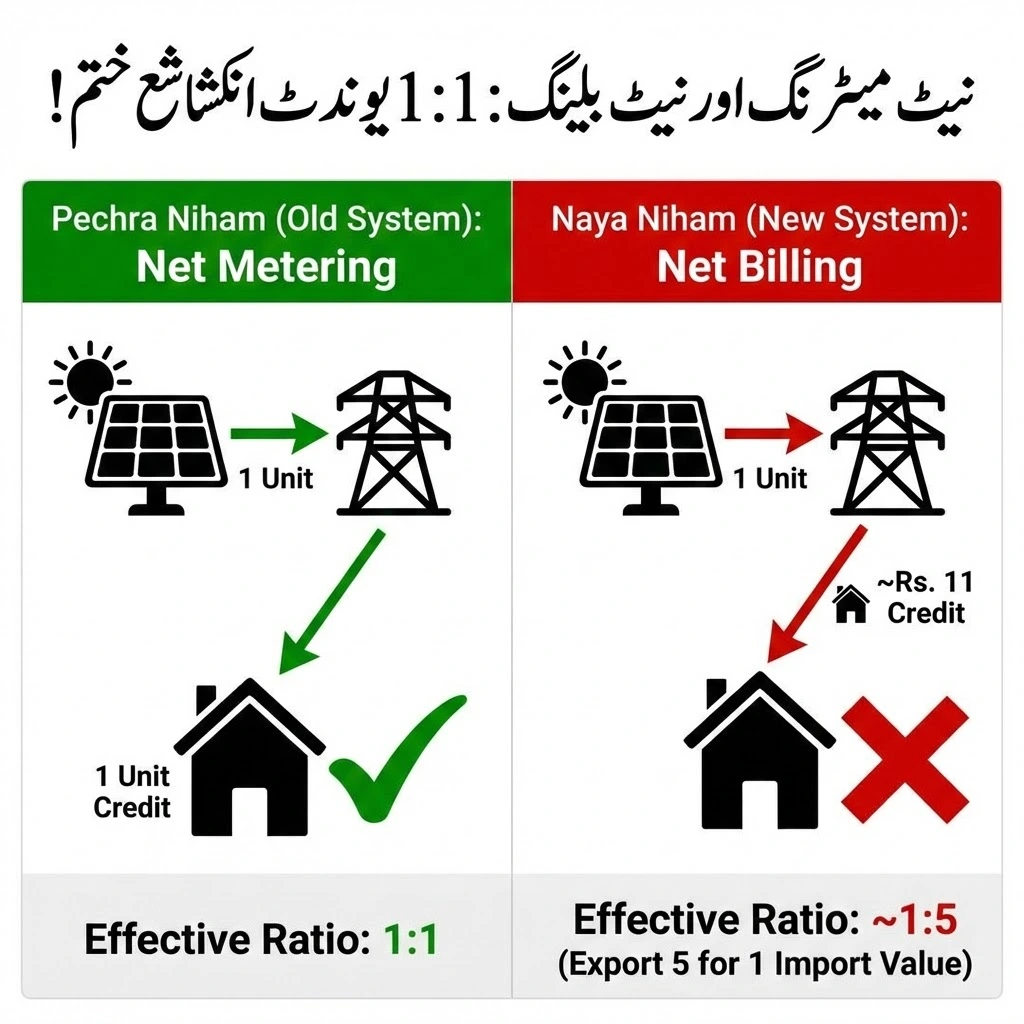
- Shift from Net Metering to Net Billing (biggest change):
- No more unit-for-unit exchange.
- Exported surplus electricity is bought by the grid at the National Average Energy Purchase Price (currently around Rs. 11–13 per unit).
- Imported electricity (from grid) is charged at full retail consumer tariff (Rs. 24–44+ per unit, depending on slab).
- Effective Ratio: Roughly 1:5 or worse (export 5 units to get credit for 1 imported unit’s value).
- Credit Validity: Exported credits now valid for only 1 month (previously up to 3 months rollover in some cases).
- Contract Duration:
- New connections: Limited to 5 years (previously 7 years).
- Existing agreements: Continue until expiry, but billing shifts to net billing immediately (from next cycle after notification).
- Other Limits:
- Solar capacity limited to sanctioned load (no more 150% oversizing in some cases).
- Applies to solar, wind, and biogas systems up to 1 MW.
These changes took effect immediately upon notification (February 9, 2026).
Impact on Solar Users – How Much Loss?
- Existing Solar Users: Your investment returns slow down dramatically. Previously, 1 exported unit saved ~Rs. 50–60. Now, 1 exported unit gives only ~Rs. 11 credit – meaning you may need to export 4–5 times more to offset night usage.
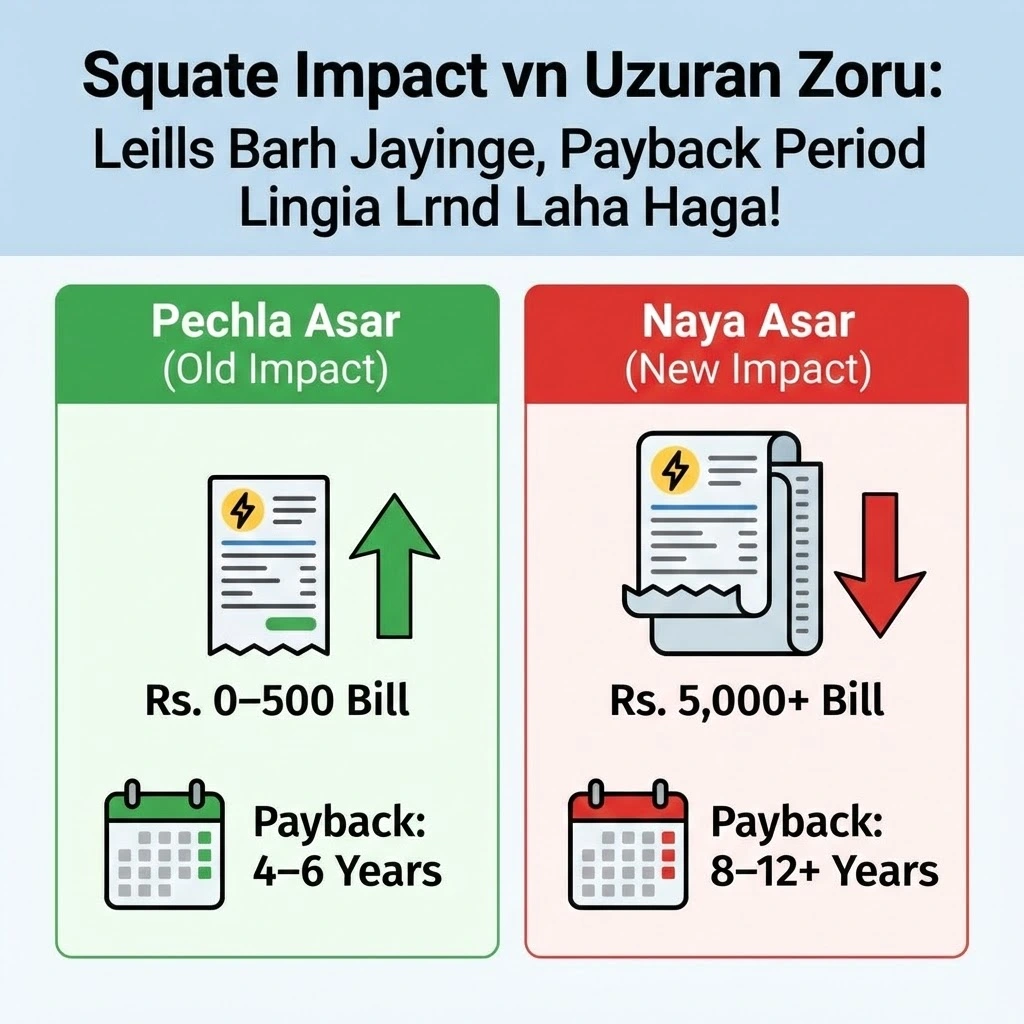
- Bills Will Rise: Many who enjoyed near-zero bills will now see monthly bills again, especially in peak summer/winter.
- Payback Period: Extends significantly (from 4–6 years to 8–12+ years or more).
- Future Installations: Less attractive – ROI worsens, discouraging new adopters.
Government’s stated goal: Protect DISCO revenue, reduce circular debt, and prevent “free-riding” on grid while maintaining capacity payments to IPPs.
Expert View: Short-Term Fix, Long-Term Risk?
Industry experts (like Waqas Moosa, Chairman Pakistan Solar Association) argue:
- This is a myopic policy driven by immediate revenue concerns.
- It pushes users toward battery storage (off-grid or hybrid systems) – expensive lithium batteries (initial cost high, but tech improving rapidly).
- Long-term danger: If users add batteries and go fully off-grid, DISCOs lose even paying customers → bigger revenue drop + capacity charges burden on remaining users.
- Public hearing feedback (held February 6–7, 2026) was largely ignored – notification issued right after, raising concerns about transparency.
- Pakistan’s per capita electricity use is low (~600 units/year vs. world average 3000, India 1100). Focus should be on increasing access (many areas still face 12–14 hours load-shedding), not penalizing solar adopters.
What Should Solar Users Do Now?
- Review Your Contract: Existing net metering agreements remain valid until expiry – but switch to net billing billing.
- Consider Battery Addition: Hybrid systems with storage can reduce grid dependency (though costly upfront).
- Monitor Bills: Check next bill cycle for changes.
- Stay Updated: Visit NEPRA official website (nepra.org.pk) for full S.R.O. 251(I)/2026 notification.
- Voice Concerns: Join solar associations or consumer forums for advocacy.
Solar remains a smart long-term choice for Pakistan (abundant sun, rising tariffs), but this policy shift makes grid-tied systems less rewarding. Off-grid/hybrid may become the future.
Disclaimer: This is based on public notifications and reports as of February 10, 2026. Always verify with NEPRA (nepra.org.pk) or your DISCO for personalized advice. No official affiliation.
For more updates on solar policies, Punjab government schemes, or jobs, keep visiting our site.
Allah Hafiz!
About The Author


Yes interested
Solarplate